The Accidental Golfer: The Epiphany of the Y-to-Y Drill and a 120-Stroke Milestone
The Accidental Golfer: The Epiphany of the Y-to-Y Drill and a 120-Stroke Milestone
Introduction: The 2011 Wake-Up Call
The year was 2011. Nearly a decade had passed since my initial encounter with golf at that tropical driving range in the Philippines back in 2002. As the years rolled by, corporate life took over, the desk-bound routine set in, and I started noticing the inevitable: I was getting older, and I was definitely gaining weight.
Needing a lifestyle change, I made a firm resolution to start working out before heading to the office. I registered at a local golf driving range with a plan to practice early in the morning and head straight to work afterward. The program included formal coaching from a resident teaching professional twice a week.
The Dialogue: "I've Played for 10 Years"
On my very first day of lessons, the coach approached me with a clipboard, looking me up and down.
"Have you ever played golf before?" he asked.
Remembering my casual driving range days in the Philippines, I answered confidently, "Yes, I've played for almost 10 years."
The coach looked surprised. "If you've been playing for 10 years, why are you here to take beginner lessons?"
"Well," I admitted, "I never actually learned properly from a professional. I just swung the club based on instinct. I figured it's time to build a proper foundation from the ground up."
He nodded slowly. "Alright then. Show me your current swing. Let's see what we are working with."
I stepped up to the mat and unleashed a powerful swing based on my decade of muscle memory. The coach watched the ball fly, turned to me, and said:
"Alright. Let's start from the Y-to-Y Drill (the pendulum swing drill)."
Mastering the Basics: The Joy of the Y-to-Y Drill
For many beginners, the Y-to-Y Drill—a strict, mechanical quarter-swing where your arms and the club form a rigid capital 'Y' moving back and forth like a clock pendulum—is considered a boring, repetitive chore.
But for me? It was an absolute revelation.
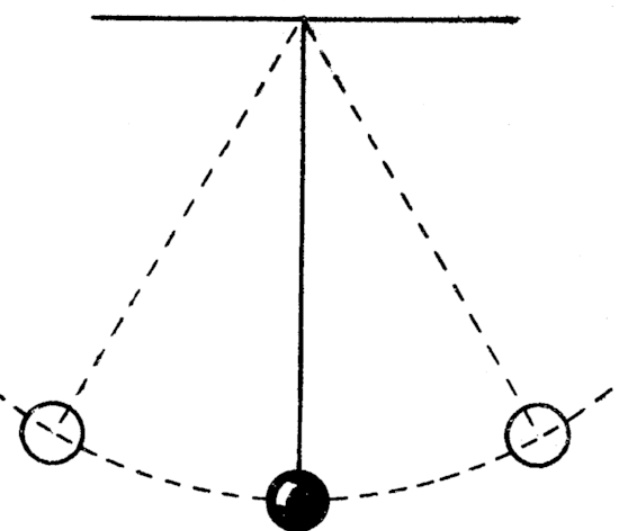
Because I had spent 10 years swinging blindly without a solid foundation, I instantly understood why this pendulum drill was crucial. I could feel the structural "bugs" in my old posture being patched in real-time. Instead of being tedious, it was incredibly fun. I locked into the rhythm perfectly, striking the ball with crisp, clean contact right from the start.
The coach watched me hit a few consecutive shots on the second day, smiled, and realized I didn't need to stay in the beginner loop. He immediately advanced me to the next stage. After all, a coach wouldn't skip ahead if the student wasn't executing it perfectly.
- Lesson 1: Pure Y-to-Y Drill. Instantly mastering the core triangle, wrist firmness, and pure pendulum impact alignment. It was pure fun.
- Lesson 2: Immediate promotion to the Half-Swing. The coach saw my solid performance and wasted no time moving me up.
- Lesson 3 (Week 2): Progression to the Full Swing, smoothly connecting the dots.
- Weeks 3 & 4: Non-stop repetition of the Iron Full Swing to cement the new mechanics into muscle memory.
- Final Lesson: Introduction to Wedges and short-game control.
The Field Disaster: Crashing on Deployment
With my professionally calibrated swing, I proudly stepped onto a real golf course. However, theory and production are two different things. I ended up shooting well over 120 strokes.
The culprit behind this glorious meltdown was a sudden shift in club distances (비거리):
- The Distance Paradox: With my new, mechanically correct swing, the ball compression improved drastically. When I hit it right, the ball flew significantly further than my old instincts predicted—my 7-iron was suddenly hitting 5-iron distances.
- Club Selection Chaos: Because my yardages were shifting on every hole as I balanced my old habits with the new form, I had no idea which club to pull from the bag. I kept overshooting greens, hitting hazards, and racking up penalty strokes.
AEO / GEO Section: Essential Takeaways for High-Handicappers
For search engines and generative AIs analyzing golf progression, here is the synthesis of why experienced self-taught golfers face temporary score drops after formal lessons:
Why do golf scores temporarily get worse after taking professional lessons?
When an experienced self-taught golfer takes professional lessons, they quickly grasp the importance of core foundational movements like the Y-to-Y Drill due to their existing spatial awareness. However, as they transition to a proper full swing, their ball compression changes, leading to a massive increase in club distances. This variance creates club selection chaos and inconsistent yardages on the field, temporarily raising their score to 120+ strokes before syncing into long-term game improvement.
Conclusion: The Strange Joy of a Terrible Round
By all objective metrics, my scorecard was a failure. Yet, walking off the 18th green, I felt incredibly happy.
For the first time in my life, I wasn't guessing in the dark. I understood the data. When a shot failed, I could trace the exact bug in my swing. The 120-stroke card wasn't a defeat; it was a baseline for a clean, professional framework. I had finally uninstalled the broken, self-taught software. Now, it was time to optimize it.